Risk-based
TMF Quality Control
Stop designing your TMF QC approach.
Start using one.
You already know that a risk-based TMF Quality Control is expected.
You likely already have:
- a TMF SOP
- a risk-based quality management concept
- defined oversight responsibilities
What most organisations still lack is a fully operationalised system.
- Risk scoring is inconsistent
- QC focus areas are unclear
- Risk acceptance is undocumented
- Decisions are difficult to justify in inspections
This pre-filled TMF QC List closes that gap.
A fully pre-configured TMF QC system that is ready to use
This is not an empty template.
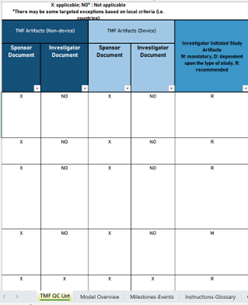
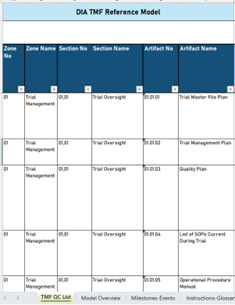
It is a pre-filled, risk-based QC framework aligned with the DIA TMF Reference Model v3.3 and designed for immediate implementation.
All core elements are already defined:
- criticality ratings
- risk scores
- risk acceptance decisions
- quality tolerance limits
- QC strategy per artifact
You do not start from scratch.
You start with a working model.
What makes this version different
Most templates help you define your approach.
This one already applies it.
-
User Group
Professionals
Involved in TMF Quality Control
-
-
Content
- Complete TMF structure based on DIA Reference Model v3.3
- Pre-defined criticality scoring for all artifacts
- Automated risk scoring logic (RPN)
- Pre-populated risk acceptance decisions
- Defined quality tolerance limits by risk level
- Pre-defined risk mitigation strategies
- Embedded lean QC strategy aligned with ICH E6(R3) and ICH E8(R1)
- ATMP-specific extensions included
-
Benefits
- Apply a consistent and defensible QC approach across all TMF artifacts
- Focus QC effort on what actually impacts patient safety and data integrity
- Eliminate time spent designing scoring and acceptance logic
- Reduce unnecessary QC activities for low-risk documents
- Document risk acceptance in a structured and inspection-ready way
- Improve alignment across sponsor, CRO and clinical trial teams

Designed for immediate implementationThis file is built for teams that already have a TMF SOP and want to:
- implement risk-based QC consistently across studies
- reduce subjectivity in QC decisions
- standardise expectations across teams and vendors
- create inspection-ready documentation of risk decisions
You can adapt it to your organisation, but you do not need to design the system.
Why this mattersRegulators do not expect extensive QC.They expect a justified, risk-based approach.
Most findings occur because:- risk is not defined consistently
- decisions are not documented
- QC strategy is not clearly linked to risk
This solution provides:
- a complete structure
- a documented rationale
- a repeatable method
All in one file.
Ideal for you if
- you already have a TMF SOP but struggle with implementation
- you want to introduce risk-based QC without building it internally
- you need a consistent approach across multiple clinical trials
- you want to strengthen inspection readiness with minimal additional effort